When homeowners search for septic system installation or septic tank installation in Thunder Bay, one of the most common questions we hear is:
"What's the difference between a septic tank and a septic field?"
Even though both are essential parts of your septic system, they serve completely different purposes. If you're installing a new system, replacing a failing field, or planning a new build, understanding how these components work will help you make smarter decisions and avoid expensive issues.
In this article, our team at Groundhogs Septic Systems breaks it down in simple terms.
What Is a Septic Tank?
Your septic tank is the first stage of your wastewater system. It's a sealed container — usually concrete or polyethylene — designed to:
Collect
All wastewater from your home flows into it.
Separate
Solids settle at the bottom (sludge), oils and grease float to the top (scum), and the liquid in the middle (effluent) moves on to the next stage.
Pre-treat
The tank allows solids to break down naturally through anaerobic digestion before the water leaves the tank and enters the septic field.
How Long Do Septic Tanks Last?
A properly installed tank can last 30–50+ years, depending on materials, soil conditions, and maintenance.
Most common signs your septic tank needs attention:
- Slow drains in the home
- Sewage smell around the tank lid
- Frequent backups
- Tank overflows during wet seasons
What Is a Septic Field?
(Also called leach field, drain field, or tile bed)
The septic field is the second stage of the system, and it's where the real treatment happens.
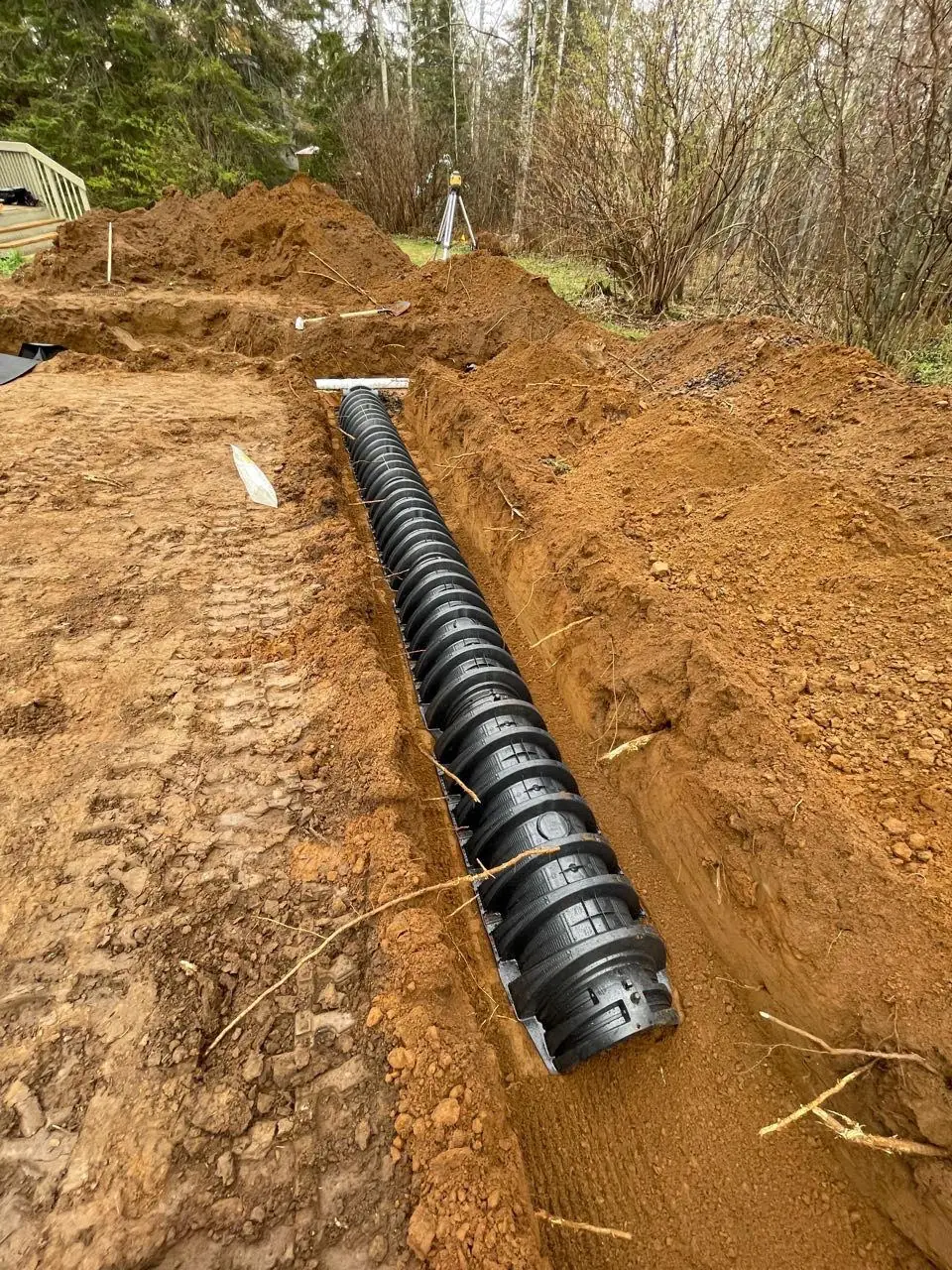
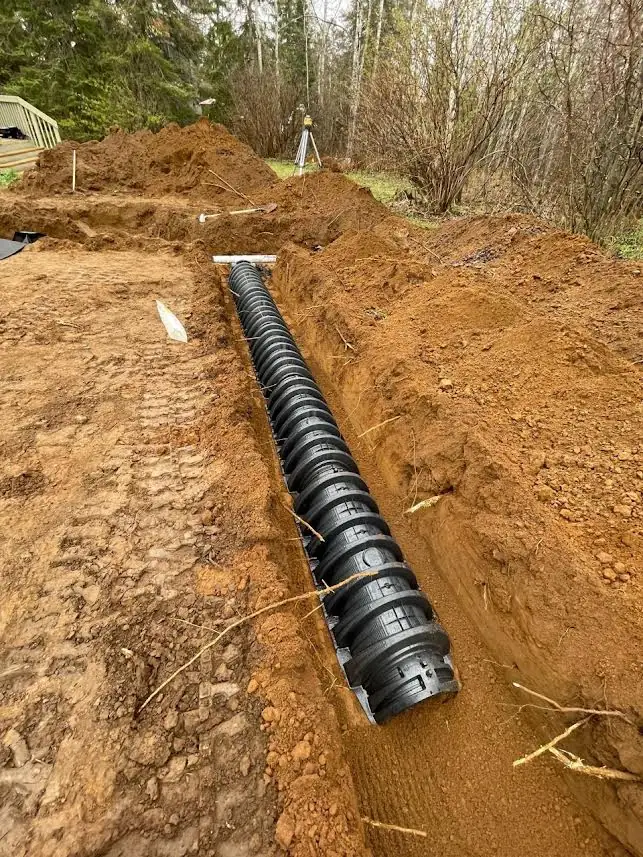
Once liquid effluent leaves the septic tank, it flows through perforated pipes or chambers into a network of trenches filled with stone or sand. The surrounding soil then filters the wastewater naturally.
A septic field's job is to:
- Evenly distribute wastewater into the soil
- Naturally filter contaminants
- Return clean, safe water back into the environment
How Long Do Septic Fields Last?
Typical field lifespan: 20–30 years
Poor soil (like Thunder Bay clay), high groundwater, or heavy usage can shorten this drastically.
Signs a septic field is failing:
- Wet or spongy ground over the field
- Strong sewage odours outdoors
- Household drains backing up
- Septic tank stays full
- Grass over the field is unusually green
Septic Tank vs. Septic Field — The Key Differences
| Component | What it Does | Typical Lifespan | Common Issues |
|---|---|---|---|
| Septic Tank | Collects & separates solids, releases effluent to field | 30–50+ years | Sludge buildup, backup, cracked tank |
| Septic Field | Filters & disperses wastewater into soil | 20–30 years | Saturation, soil failure, root intrusion, clogging |
The tank pre-treats wastewater. The field finishes the job. You need both for a functioning septic system.
Thunder Bay Soil Conditions: Why Many Septic Fields Fail
In Thunder Bay and Northern Ontario, the most common causes of premature septic field failure include:
- High clay content soils
- Compact or shallow soil layers
- High groundwater
- Heavy seasonal saturation
- Older systems that were undersized
This is why proper design, soil testing, and engineering are crucial — and why Groundhogs Septic Systems has grown into the largest septic installer in Northern Ontario.
Do You Need a New Septic Tank or a New Septic Field?
Here's a quick guide:
You may need a new septic tank if:
- The tank is cracked or deteriorating
- Roots have invaded the tank
- Solids are constantly overflowing into the field
- Tank capacity is too small for modern home usage
You may need a new septic field if:
- The system is always backing up despite pumping
- Water is pooling or bubbling on the field
- Effluent isn't draining properly
- The tank fills up right after pumping
- Your property fails a percolation (perc) test
Most major septic system failures involve the field, not the tank.
Installing or Replacing a Septic System in Thunder Bay?
Groundhogs Septic Systems offers:
- Septic system installation
- Septic tank installation
- Septic field (leach field) installation
- Advanced treatment systems (Eljen, Waterloo Biofilter, etc.)
- Engineering, soil testing & permits
- 3-day installation timeline
- Transparent septic cost calculators
- 100% permit success rate
Get a Fast, Accurate Septic Installation Estimate Today
Groundhogs Septic Systems is the #1 installer in Northern Ontario. We provide fast, clean, code-compliant installations without surprises.
Phone: 1-888-907-3777
Website: groundhogsseptics.com